
Why did my weight go up overnight? (It probably isn’t fat)
Woke up a kilo heavier after a good day? It's almost never fat. The six real reasons the scale jumps overnight, and the one number worth watching instead.
In this article
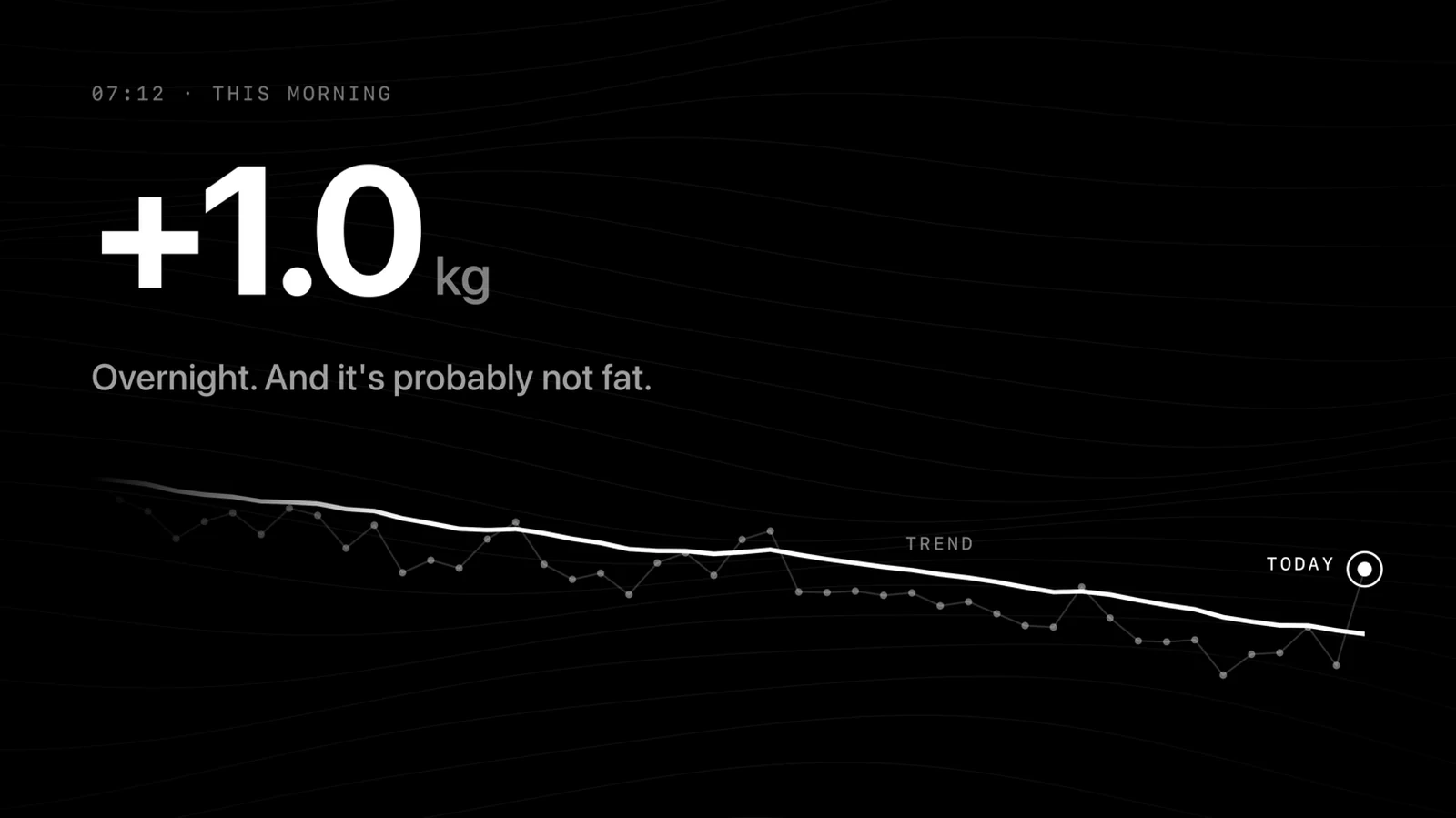
You did everything right yesterday. You ate well, you walked, you went to bed on time. This morning you step on the scale and it says you are a kilo heavier. If you have just watched your weight go up overnight like this, here is the short answer before the long one: it is almost certainly not fat.
Few moments in losing weight feel as unfair as this one, and few are as misunderstood. So let's take it apart calmly. What actually changed overnight, why the scale exaggerates it, and which number deserves your attention instead.
The scale doesn't measure fat. It measures everything.
What the scale really measures
A bathroom scale reports one thing: the total mass of your body at that moment. Fat, muscle and bone are part of it. So is the water in your cells and blood, the food still moving through your gut, and the glass of water you had before bed.
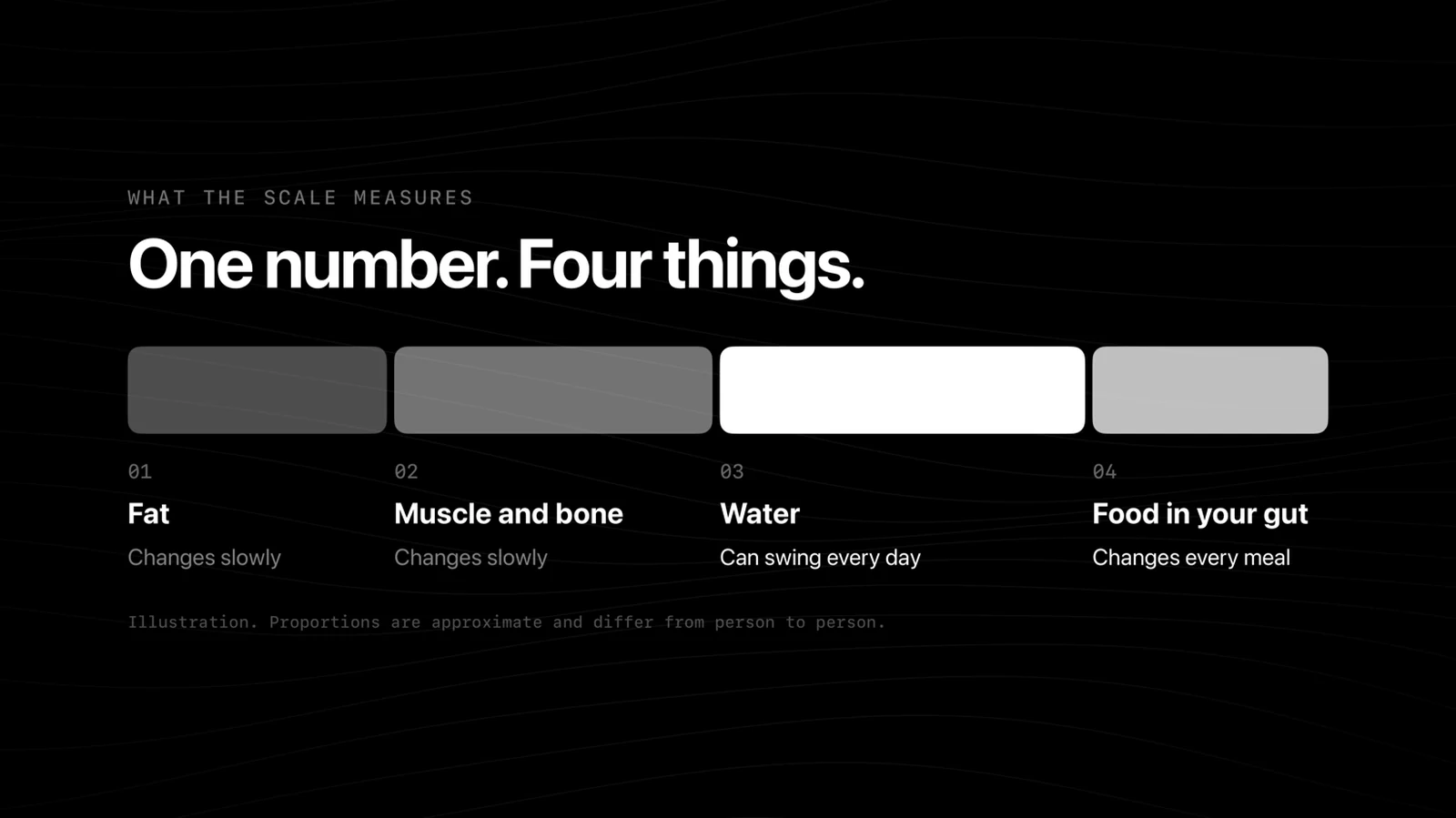
Fat and muscle change slowly, over weeks. Water and food can change by a kilo or more between one morning and the next. According to the Cleveland Clinic, daily swings of a few pounds are common and normal. That is why the number on the scale can climb while the thing you actually care about is going down.
A quick reality check helps here. A widely used rule of thumb says a kilo of body fat stores roughly 7,700 kcal. To gain a real kilo of fat overnight, you would need to eat about 7,700 kcal more than you burned, in one evening. If that didn't happen, the kilo on the scale is something else.
Why did my weight go up overnight? Six common reasons
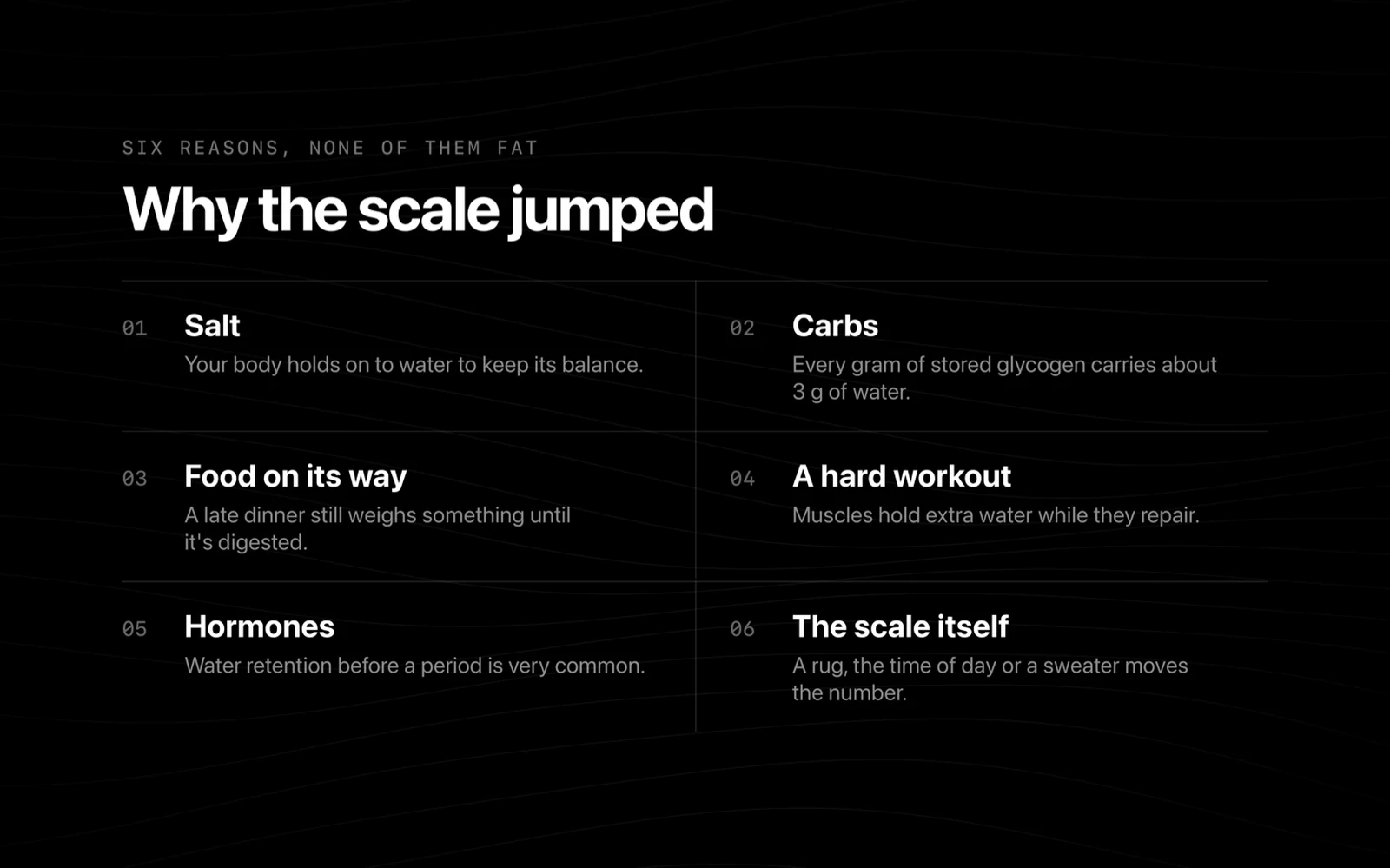
When people see their weight go up overnight, the cause is nearly always one of these six, and often two or three of them at once.
1. Salt
A salty dinner (takeaway, sushi with soy sauce, a bag of chips) makes your body hold on to extra water to keep its balance. Health services such as Better Health Channel list a salty diet among the everyday causes of fluid retention. The number goes up the next morning and usually settles within a day or two, without you doing anything.
2. Carbs
Your body stores carbohydrate as glycogen in your muscles and liver, and glycogen is stored together with water. A classic study by Olsson and Saltin found about 3 to 4 grams of water for every gram of glycogen, and a 2015 study confirmed at least 3 grams. A pasta night refills those stores, and the water comes with it. It is also why the first week of a low-carb diet often shows a dramatic drop that has little to do with fat.
3. Food that is still on its way
A late, large meal has weight. Until it is digested, it is simply part of what the scale measures. Fibre-rich food moves more slowly, so it stays on the scale a little longer.
4. A hard workout
Strength training or a long run can push the number up for a day or two. Muscles that are repairing themselves hold extra water. It is a sign that you trained, not that you gained.
5. Hormones and the menstrual cycle
Many people who menstruate notice the scale climbing in the days before a period and dropping again once it starts. Hormonal water retention in the two weeks before a period is well documented, and it can be large enough to hide weeks of real progress if you only look at single days.
6. The scale, the time and the clothes
A scale on a soft rug, a different time of day, a sweater or a full bladder can each move the number. None of them have anything to do with your body changing.
How to weigh yourself so the number means something
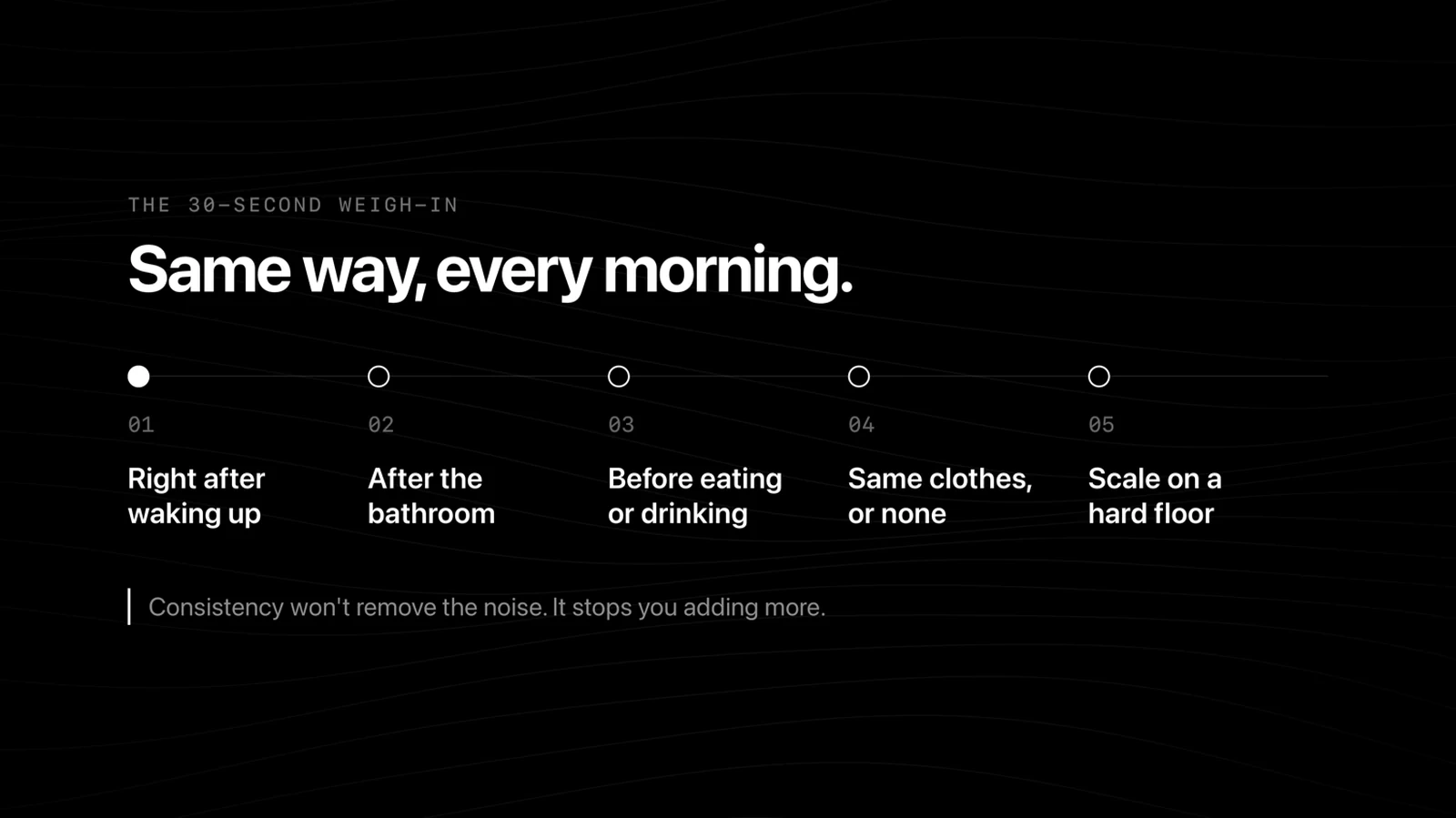
You can't remove the daily noise, but you can stop adding to it. The trick is to make every weigh-in as similar as possible.
The number that actually matters: your trend
If single weigh-ins are noisy, the answer is not to weigh yourself less. The answer is to stop reading them one at a time.
A trend line takes all of your weigh-ins and smooths them into one steady curve. Each new morning nudges the trend a little instead of yanking it around. A salty dinner barely moves it. A month of real change moves it clearly.
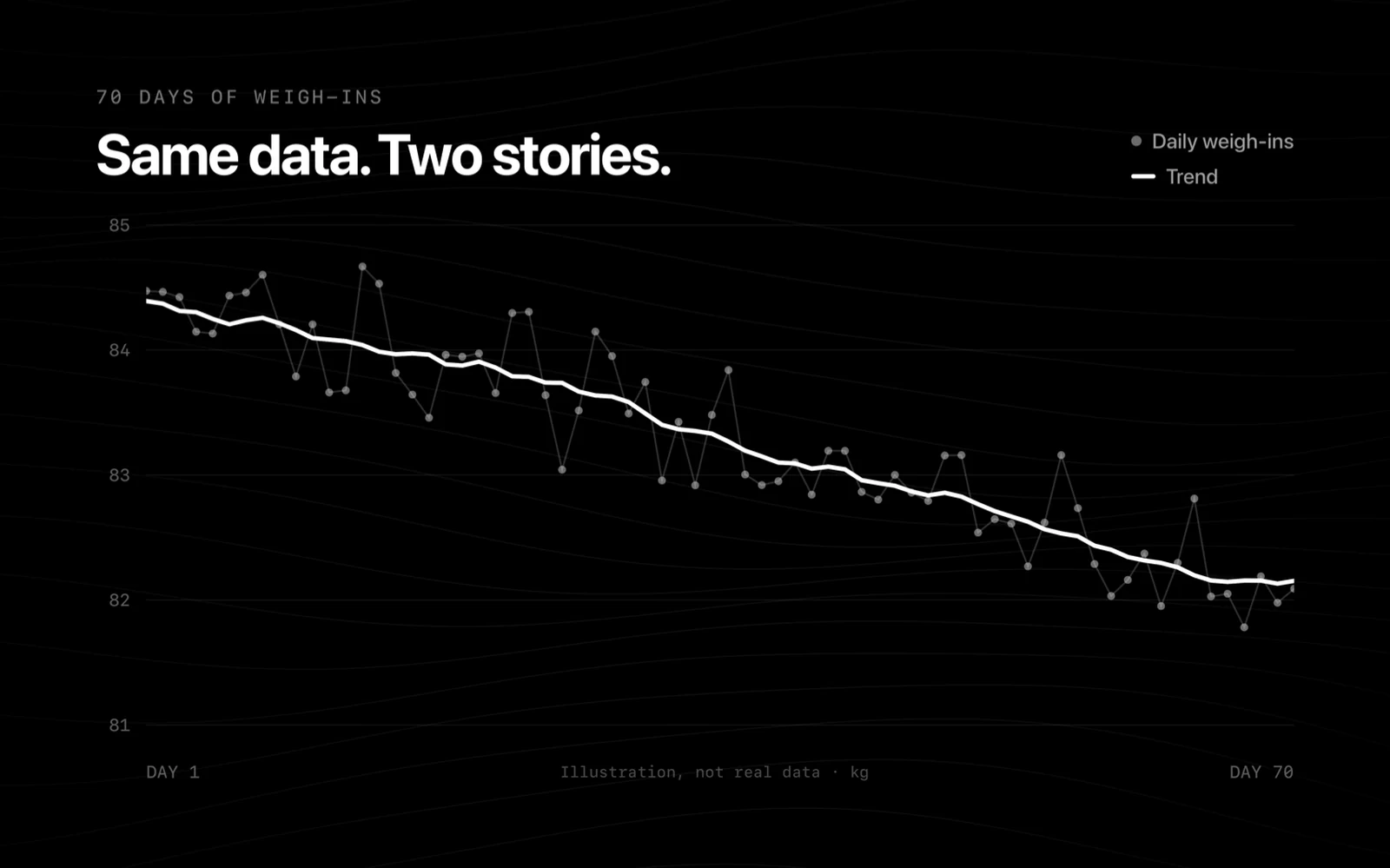
Look at the grey dots above. Living through those 70 days one weigh-in at a time, there were whole stretches where it looked like nothing was working. The trend tells a different story: steady, honest progress the entire time.
How to read your trend without obsessing
- Look at weeks, not days. One or two days up mean nothing. A trend that has been flat for two weeks or more is worth a closer look.
- Watch your weekly rate. How much the trend moved in the last seven days says far more about progress than today's number.
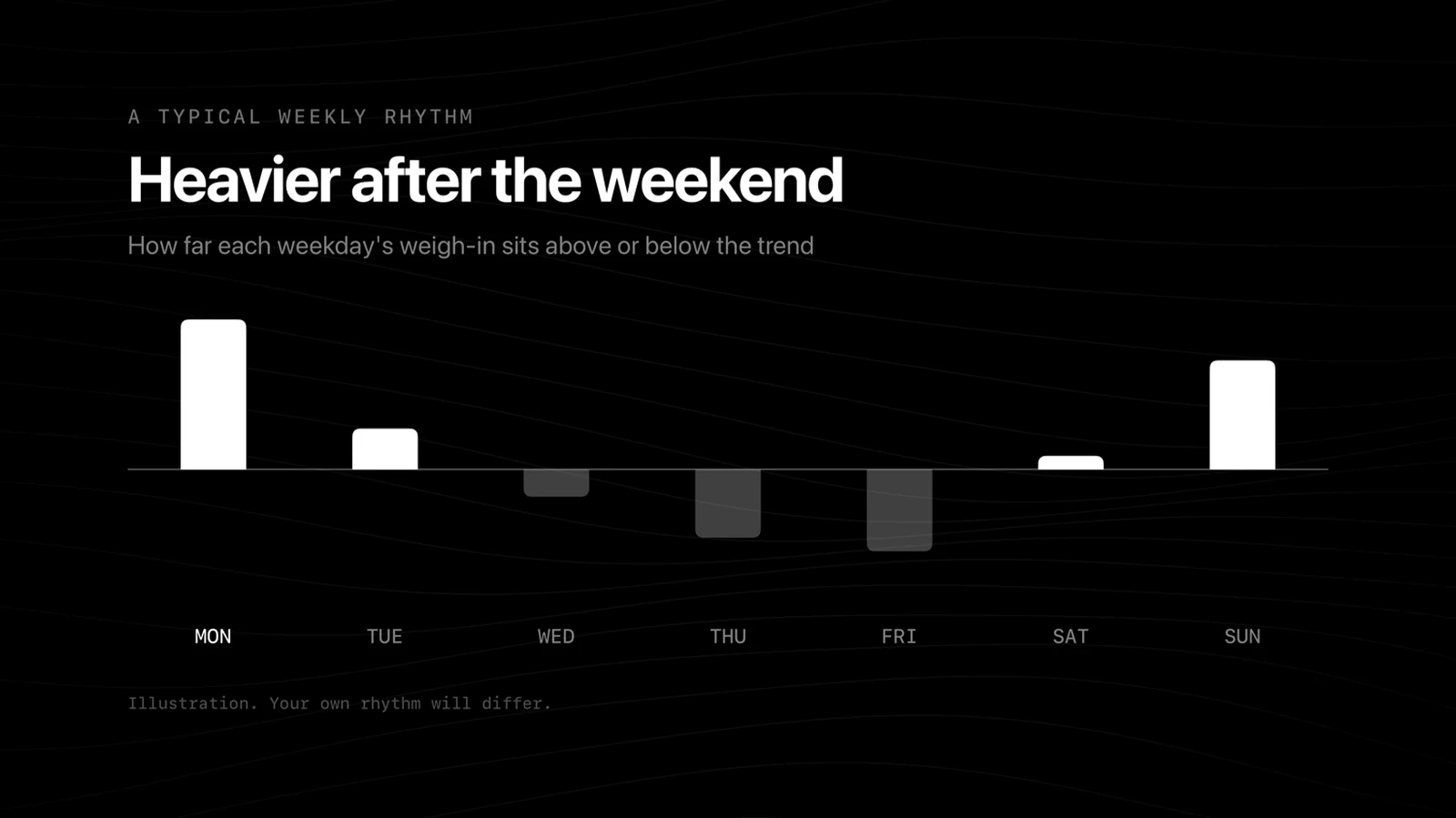
- Learn your own rhythm. Many people are heavier after the weekend. Once you know your pattern, a Monday spike stops being scary.
- Expect plateaus. Almost everyone hits one. It usually means the body is adjusting, not that the plan has stopped working.
How Weighly does this for you
We built Weighly around exactly this idea, because a jumpy number every morning is what makes so many people give up.
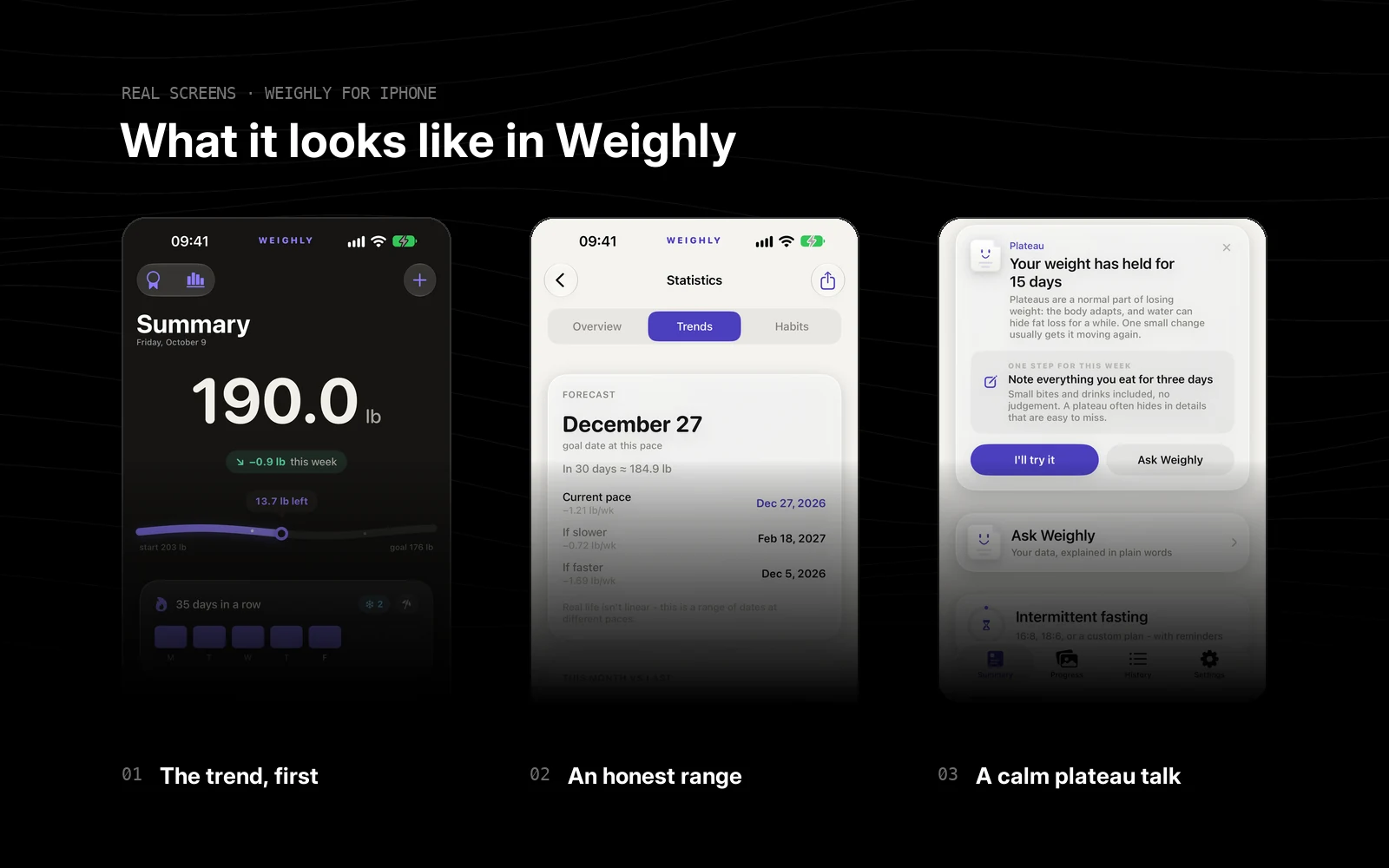
- The trend comes first. Every weigh-in feeds a smoothed trend that filters out daily water and food swings, so you see your real direction at a glance.
- Your weekly rhythm. Weighly learns which days you tend to weigh more, so a heavy Monday comes with context instead of panic.
- Cycle-aware. If you track your cycle in Apple Health, Weighly can mark the days when water retention is likely, so a bump in that window is explained, not blamed on you.
- A calm plateau talk. When the trend stands still for two weeks or more, Weighly doesn't scold you. It suggests one small, specific thing to try.
- An honest forecast. Based on your own pace, Weighly estimates when you will reach your goal as a range of dates, not a promise.
- Ask "why is my weight up today?" On iPhones with Apple Intelligence, the AI coach answers from your own data, right on the device.
There is no account to create, and your weight stays on your iPhone. It syncs only through your own iCloud, if you turn that on.
Quick answers
How much can weight change in one day?
For many adults, swings of 1 to 2 kg from one day to the next are common, mostly from water and food. The more your meals, salt, sleep and training vary, the bigger these swings tend to be.
Did your weight go up overnight? Should you eat less today?
No. Cutting back hard because of one number usually backfires, and the jump is almost always water. Keep doing what you planned and look at the trend at the end of the week.
Should I weigh myself every day?
If daily numbers stress you out, weighing less often can feel safer. But fewer weigh-ins make the picture noisier, not clearer. Weighing daily and judging only the trend gives the most accurate view with the least drama.
Why does the scale go up after I start working out?
Muscles hold extra water while they recover, especially when a workout is new or harder than usual. Give it a week or two before judging anything.
When should I talk to a doctor?
Normal daily swings come and go. Talk to a doctor if sudden weight gain comes with swelling in your legs or ankles, shortness of breath, or if the gain keeps going for no reason you can explain.
The short version
If you see your weight go up overnight, it is almost always water and food, not fat. The scale measures everything, so single days mislead. Weigh yourself the same way every morning, then watch the trend over weeks. That is where your real progress lives, and it is usually better than any single morning makes it look.
Oleksandr, founder of GladeX